|
How much should an artist or philosopher remain in the world? Is some degree of removal from society necessary for thought and creativity? Guy Stagg asks these questions of three writers and thinkers who sought retreat throughout their lives – the Austrian philosopher Ludwig Wittgenstein (1889– 1951), the British painter and poet David Jones (1895–1974) and the French essayist Simone Weil (1909–43). Because all three were religious believers attracted to monastic life, Stagg is just as preoccupied with the nature of faith as he is with the link between isolation and creativity. The biographies are necessarily selective, his own experiences – both as someone who suffers from depression and as a writer who has isolated himself to work – enable him to treat his complexx subjects with insight and empathy. The World Within is also part travel memoir, centred on Stagg’s visits to the religious
communities in which his subjects sought haven – the opulent Klosterneuburg monastery,
north of Vienna, where Wittgenstein worked as a gardener in the summer of 1920; the
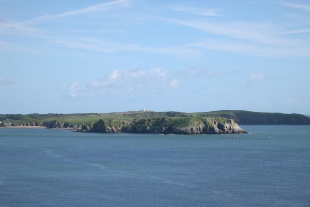
Benedictine community on the Welsh island of Caldey, where Jones stayed regularly
from 1925 on; and Solesmes abbey, near Le Mans, where at Easter 1938 Weil sought
relief from her terrible migraines. These travels constitute a spiritual pilgrimage;
but, unlike the physical pilgrimage described in his first book, The Crossway (2018)
– an account of Stagg’s ten- it, or experience it yourself?” The question echoes throughout the book, without being answered as firmly as one would wish. Stagg was brought up in a secular household. An atheist throughout his teens, he became interested in religion after a period of depression in his early twenties, and was drawn to “the believers who willingly turned their back on temptation and welcomed misfortune as a test of faith”. Depressives, he suspects, are particularly attracted to monastic life, seeking in the hushed cloisters protection from the world and their own emotions. One feels that he would like to share the faith that guided his subjects, but can’t make the leap. No matter how much time he spends in churches and monasteries, talking to monks and listening to plainsong, Stagg remains a spiritual outsider, curious about religious belief without assenting to its core tenets. For Wittgenstein, whose rigorous approach to philosophy coexisted with a deep feeling
for religion, faith was not a matter of propositional belief. Rather, it consisted
in a sense of wonder at the existence of the world and a feeling of being completely
safe within it. The two months he spent as a gardener at Klosterneuburg, where he
slept in a potting shed at night, are presented here as an attempt at self- Though born into one of Austria’s wealthiest families, he had renounced his inheritance
the year before he stayed at the monastery. He was emotionally shattered by his experiences
in the First World War and deeply depressed after the deaths of his brother Kurt
(the third of his brothers to kill himself ) and a close friend from Cambridge. Wittgenstein
had also abandoned philosophy, believing that he had resolved all of its major problems
in his first book, Tractatus Logico- Wittgenstein’s philosophy is notoriously difficult, but Stagg correctly identifies his approach to ethics and aesthetics as mystical, not analytical. This was radically misunderstood by the logical positivists, who claimed him as their forefather – probably because, as Stagg says, it’s not what one would expect |
|
|
from a philosopher best known for linguistic analysis. Wittgenstein ended the Tractatus with the words “Whereof one cannot speak, thereof one must be silent”, an injunction keep quiet about the most important things in life because they exist beyond the bounds of language. The logical positivists took this as an endorsement of their belief that any statement that couldn’t be verified by science was meaningless rubbish. In fact, Wittgenstein was expressing the opposite view. Caldey seems to suit Stagg better than luxurious Klosterneuburg. On this cold, wet
island, he explores the surroundings that inspired the least religious of his subjects,
for whom retreat was primarily an artistic endeavour. Jones had joined the Catholic
Church in 1921 and, although he prayed with the monks on Caldey, he mainly sought
a space where he could work “without an audience”. It was here that he developed
new watercolour to capture the Welsh coastline and wrote large parts of his epic
First World War poem In Parenthesis – although remembering his experiences at the
front led to a nervous breakdown. Stagg also considers a less elevated reason for
Jones’s retreats: that he was fleeing from the of adult life, for which he feared
he was not emotionally equipped. One senses that this is the closest Stagg gets to
a heightened state of awareness, although it is aesthetic, not religious, induced
by the landscapes and boredom: I began to notice things I might have otherwise overlooked. Began wondering which word would capture the shining skeins of cloud, or which colour would conjure the puddles in the forecourt as they flushed with afternoon light. For Weil, the monks’ chanting at Solesmes provided some relief from her excruciating migraines, an affliction that plagued her short life. Stagg sits through hours of plainsong during his stay at the abbey, as if prepping himself for a realization that never comes. Try as he might, he cannot perceive the inner significance that Gregorian chant held for Weil, whose time at Solesmes also helped to shape her conception of faith. Though she had been raised in an agnostic Jewish household, and despite never formally joining the Catholic Church, Weil claimed to have encountered God in a series of epiphanies. She saw Christianity as the religion of the downtrodden, of slaves (for which it had been excoriated by Friedrich Nietzsche in the previous century), in which poverty and suffering were essential. Stagg grapples with Weil’s response to what theologians call the problem of evil – the difficulty of reconciling suffering and pain with the supposed existence of a benevolent deity. In her essay “The Love of God and Affliction”, she presents suffering as what Stagg calls “the sting of [God’s] absence”. On this view, pain and misery are proof of God’s permanent withdrawal from his creation and thus, paradoxically, of his infinite perfection. Here is Weil flouting the Wittgensteinian injunction to keep silent about the transcendental, with results that will strike readers as profound or nonsensical, depending on their convictions. Stagg admires the passion and integrity of Weil’s writing, but is not convinced by her response to the problem of evil, which he says has been the main barrier to his believing in God. Though he remains ambivalent about faith, the author’s convictions about solitude and creativity change fundamentally throughout this elegant, thoughtful book. He says he had fallen for the romantic myth of the genius as tortured loner – that his “attraction to austerity had been born from fear” of failure and disappointment in the modern world. By following his subjects out of society, Guy Stagg realizes that “the confusion beyond [the abbeys’] walls” is where he belongs. In different ways, all three of his subjects show that one can never really escape that confusion. |